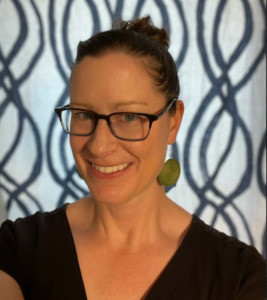
 In celebration of Mental Health Awareness Month this May, we are spotlighting Margie Hartman LMSW, one of our dedicated clinicians who play a vital role in Global Refuge’s Mental Health Services program. The team’s commitment to improving clients’ mental wellbeing is not just a profession but a passion. We asked Margie to share some insights into the challenges and triumphs of working in mental health, providing a deeper understanding of the complex landscape our clients navigate daily.
What inspired you to work in mental health services for refugees and asylum seekers?
I’ve been working as a social worker in Baltimore City since 2015. In my previous role as a community school coordinator, the goal was to reduce barriers to essential community services and resources, making them more accessible in the school so that the wellbeing of students and their families could improve. My school in southeast Baltimore had the highest number of newcomer students, many of whom had experienced significant hardships in their home country and migration journeys.
One of the greatest needs for this community were mental health services that were culturally and linguistically appropriate for these kids and their caregivers. It was easy to find food for families, enroll them in adult English classes, refer them to low-cost health services, and get kids in enrichment programs after school. But I often came up short when trying to connect kids or their caregivers to mental health services. There just weren’t many options out there.
I heard about Global Refuge’s mental health program right at the time I was exploring my next steps. As a bilingual social worker, I felt like I could be part of the solution to this problem. There is still a great need, but it’s been very gratifying to be part of an organization that is prioritizing the mental health needs of uninsured newcomers like the students and families.
Can you share a memorable experience where you felt your work at Global Refuge made a significant impact on a patient’s life?
When our client, who we’ll call M, found herself in an unsafe marriage, we helped create a safety plan for her and her kids. We also taught M coping skills and connected her to community resources including a domestic violence support group. M reported at the end of treatment that she felt more confident in herself and more aware of her strengths.
She said she was excited to connect to other women who could relate to her experience. She was also taking English classes. Her problems were not eliminated, but Global Refuge’s Mental Health Services helped M to gain the insight and skills she needed to support her healing journey.
Could you describe your typical day, focusing on the unique challenges faced by newcomers and how you address both their needs and the cultural stigmas surrounding mental health in your sessions?
Every day and session are quite different, depending on who I am working with. I love having the flexibility to “meet the client” where they are and tailor services to what they need. If they are 7 to 11 years old, I meet them in the office or their school for 30 to 45 minutes. If they are 12 years and older, I can meet them in the office, school, or over telehealth. For child clients, there is a lot of play, art, and movement breaks. Some adolescents and adults prefer talk therapy, whereas others might need to focus on grounding techniques or process their experiences through writing or artwork. Almost all my sessions include what is called psychoeducation about trauma, depression, and anxiety, as well as their effects on the body, thoughts and beliefs, emotions, and behavior. I regularly incorporate mindful breathing, movement, and visualizations.
In terms of addressing cultural stigmas, I often ask clients in the first session about their preconceptions about therapy, how they feel about being here, and what they think we’ll be doing. Clients often name their worries about “being crazy,” and express their nervousness about talking with a stranger. I always reassure them that whatever they are feeling is valid. I normalize their experiences and mental health challenges, ensuring the client knows that these are their natural responses to their unique human experiences. I welcome their doubts and questions.
I educate clients about the therapeutic relationship, let them know I get to earn their trust, and remind them that they are in charge of what they share and when. I tell them that they, not me, are the experts of their lives, and that I am on their team. For most clients, this is the first time they and their stories have been witnessed in this way, and they report feeling relieved of some of their most intense symptoms after just a session or two.
What excites you most about the work you do?
It’s an honor to support people through therapy. It’s sometimes like clearing cobwebs off a long-lost treasure or seeing the sunshine after a storm. I get really excited to see the client come into a clearer understanding of who they are, what they are capable of, and how valuable and worthy they are.
Margie’s experiences remind us of the profound impact our work can have on individuals and communities. From tackling cultural stigmas to witnessing transformative moments of healing, the journey is filled with challenges and rewards. For more information about this effort, visit our Mental Health Services page.